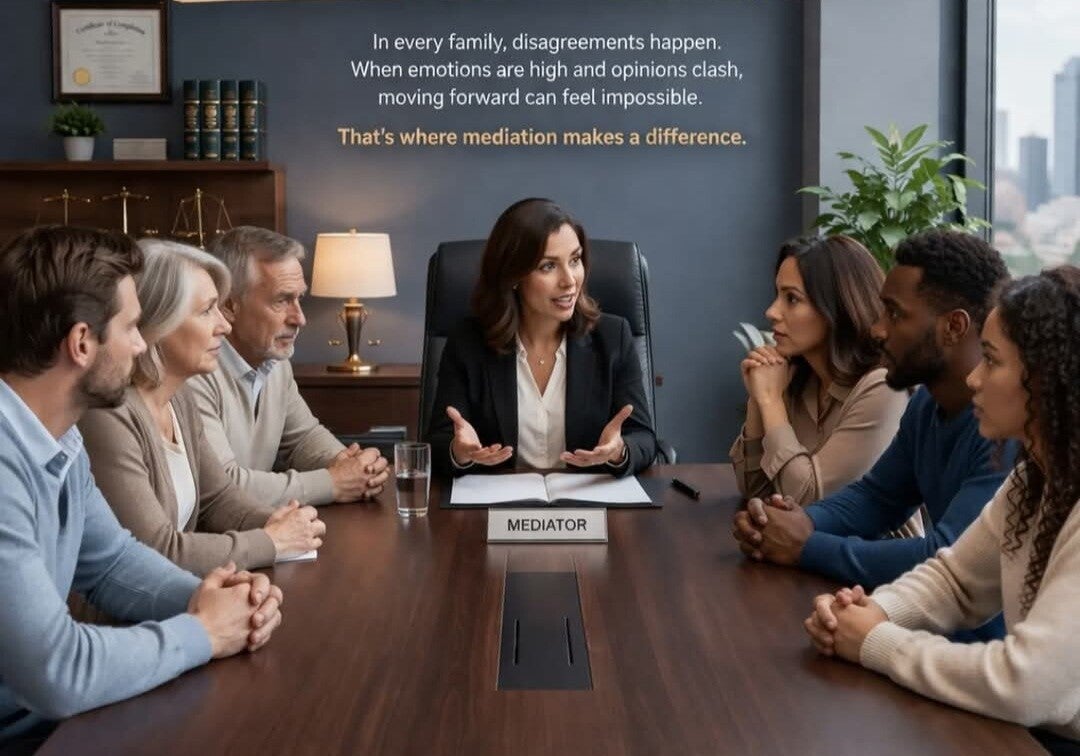
When conflict arises—whether within a family, a relationship, or a workplace, it can feel overwhelming.
Many people believe their only option is to argue, avoid each other, or turn to legal proceedings.
But there is another way.
What is mediation, really?
Mediation is not about deciding who is right or wrong. It is about creating a calm, structured space where people can talk, be heard, and work towards practical solutions. A mediator does not take sides or make decisions. Instead, they guide the conversation—helping both people communicate more clearly and focus on what matters most.
Why many people choose mediation?
People often come to mediation because:
Communication has broken down
Emotions are running high
They feel stuck and unsure what to do next
Mediation offers:
A respectful and confidential environment
A chance to be heard without interruption
Practical, future-focused solutions
A way to avoid unnecessary stress and escalation
Where mediation can help? Mediation can support a wide range of situations, including:
Separation and divorce
Parenting arrangements
Wills, inheritance, and family disagreements
Workplace issues
Community disputes
Conflict is a part of life—but how we deal with it matters.
Mediation is not just about sitting down and talking. It is a structured process guided by a trained professional whose role is to support both parties in moving forward constructively. A skilled mediator brings more than neutrality—they bring expertise.
A trained mediator helps to:
Reframe conversations
Clarify misunderstandings
Encourage constructive dialogue
This allows both parties to express their views more effectively and truly listen to each other.
A skilled mediator will:
Guide each stage of the discussion
Help identify key issues
Keep conversations focused and productive
This prevents discussions from becoming circular or overwhelming.
Managing emotions and conflict
Conflict can bring strong emotions—frustration, stress, or even anger.
A mediator is trained to:
De-escalate tension
Keep conversations respectful
Support both parties in staying engaged
This makes it possible to have conversations that might otherwise feel too difficult.
A professional and supportive presence
A qualified mediator brings:
Professional training
Experience in handling sensitive situations
A commitment to neutrality and confidentiality
This ensures that the process is not only effective, but also safe and respectful for everyone involved.
Final thought
Mediation works not just because people are willing to talk—but because they are supported by a skilled professional who knows how to guide the process.